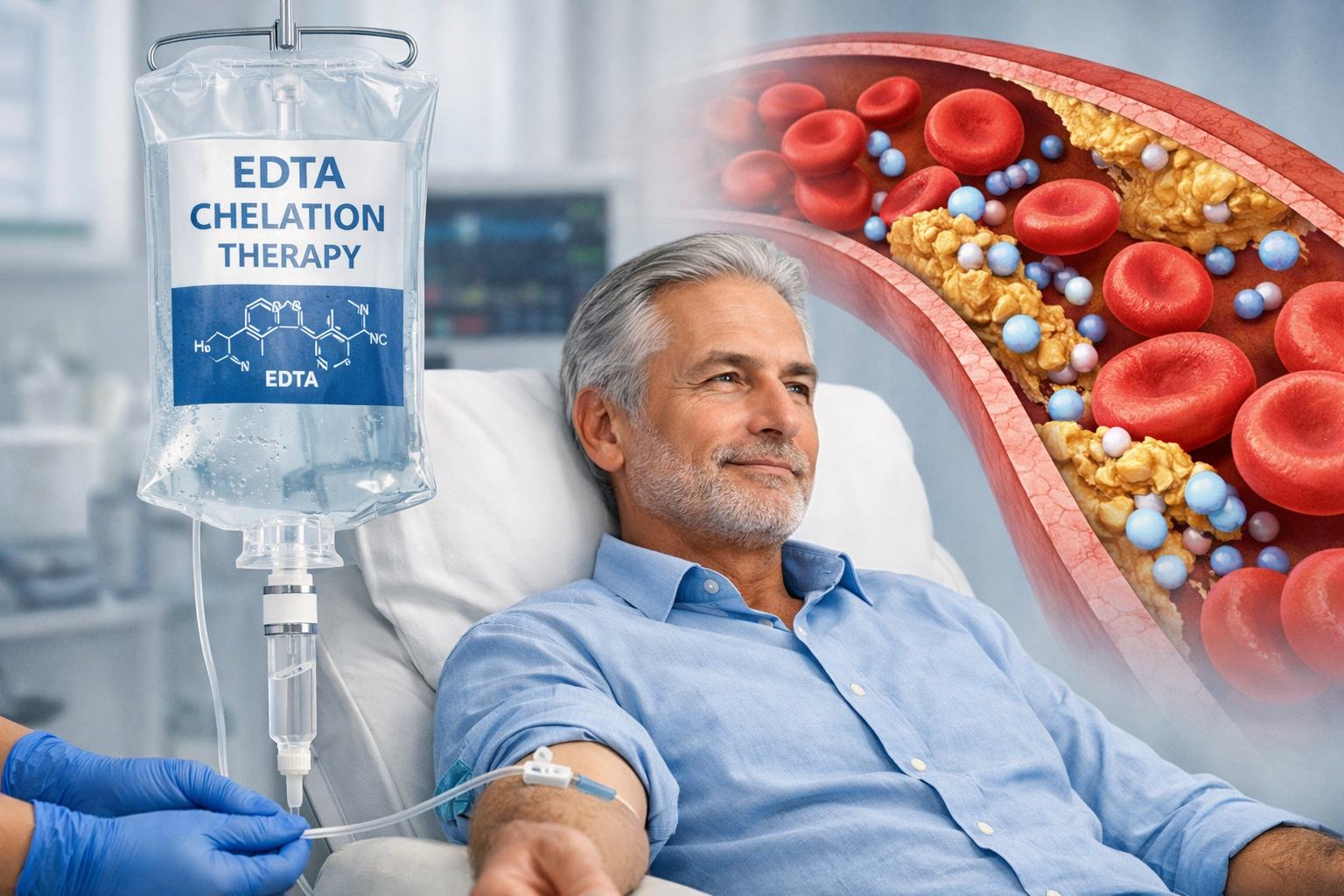
Intravenous EDTA — a compound that binds to and removes heavy metals, radioactive isotopes, and arterial calcium deposits from the body — delivering profound cardiovascular, neurological, and longevity benefits.
Ethylene diamine tetra-acetic acid (EDTA) is a synthetic amino acid that has a powerful affinity for positively charged metal ions. When administered intravenously, EDTA travels through the bloodstream and binds to heavy metals, calcium deposits, and radioactive isotopes — forming stable, water-soluble complexes that are safely excreted by the kidneys.
Originally developed in the 1940s as a treatment for lead poisoning, EDTA chelation has been used clinically for over 70 years. Beyond heavy metal removal, it has been extensively studied for its cardiovascular effects — reducing arterial plaque, improving circulation, and supporting de-calcification of the arteries and soft tissues including the pituitary gland.
At Eden, all chelation sessions are supervised by our integrative physician and preceded by a comprehensive pre-treatment analysis to confirm suitability and establish a baseline for tracking outcomes.
EDTA chelation works across three distinct categories of harmful substances that accumulate in the body over time — from environmental exposure, dietary sources, and the natural ageing process.
Environmental and dietary exposure to heavy metals is near-universal in the modern world. These metals accumulate in tissues, disrupt enzymatic function, and contribute to neurological decline, fatigue, and systemic inflammation. EDTA binds and eliminates them via the kidneys.
Calcification of the arteries — the hardening and narrowing of blood vessels due to calcium and plaque deposits — is a primary driver of cardiovascular disease. EDTA chelation has been studied in multiple large-scale trials (including the NIH-funded TACT trials) for its ability to reduce arterial calcium deposits and improve cardiovascular outcomes.
Exposure to radioactive isotopes from environmental contamination, medical imaging, air travel, and dietary sources accumulates in bones and soft tissues. EDTA chelation assists in binding and facilitating the excretion of certain radioactive metals, reducing the long-term toxic burden they impose on cellular function.
By removing the root cause — accumulation of toxic metals and calcium deposits — EDTA chelation delivers downstream benefits across multiple organ systems, with effects that compound over a course of treatments.
Removal of arterial calcium and plaque improves vessel flexibility and blood flow. The NIH-funded TACT trial found a 26% reduction in cardiovascular events in patients undergoing EDTA chelation — rising to 41% in diabetic patients.
Heavy metals — particularly mercury, lead, and aluminium — are neurotoxic. Their accumulation is associated with cognitive decline, brain fog, and neurodegenerative conditions. Chelation removes these metals, protecting neurological function and supporting cognitive clarity.
Heavy metals interfere with mitochondrial function and cellular energy production. Removing this burden typically results in significant improvements in energy levels, endurance, and general vitality — often noticeable within a few sessions.
The pituitary gland — the master hormonal regulator — calcifies with age, diminishing hormone production and signalling efficiency. EDTA chelation supports pituitary de-calcification, helping restore hormonal balance and the cascade of downstream benefits this brings.
Improved arterial flexibility and reduced plaque burden translates directly to better circulation — particularly to the extremities. Clients frequently report improvement in peripheral neuropathy, cold hands and feet, and erectile dysfunction associated with vascular restriction.
Heavy metal toxicity suppresses immune function and drives chronic inflammation. Removing this burden allows the immune system to redirect resources from managing toxic load to maintaining active surveillance and defence — reducing chronic inflammatory conditions.
EDTA chelation has one of the longest clinical histories of any integrative therapy. The landmark TACT trials, funded by the US National Institutes of Health, provide robust evidence for its cardiovascular benefits.
EDTA chelation has been used clinically since the early 1950s, making it one of the most established therapies in integrative medicine.
The NIH TACT trial found a 26% reduction in cardiovascular events in post-heart attack patients receiving EDTA chelation — rising to 41% in diabetic patients.
The Trial to Assess Chelation Therapy enrolled over 1,700 patients, making it the largest and most rigorous chelation trial ever conducted.
Every chelation session at Eden is doctor-supervised and preceded by pre-treatment analysis to confirm suitability and customise the protocol to your specific health profile.
Blood and urine analysis to assess kidney function, mineral levels, and overall suitability. This forms the baseline for monitoring your progress.
Review of your analysis results with our integrative physician. Protocol is customised to your health status, goals, and any relevant medical history.
90-minute infusion of EDTA with supporting nutrients including Vitamin C, B vitamins, and magnesium. You relax comfortably throughout, supervised by our nurse.
Post-infusion rest and hydration. Mineral supplementation is prescribed to replace any minerals excreted alongside the chelated metals.
EDTA chelation requires a pre-treatment consultation and analysis before your first session. Contact us to begin the process — our doctor will assess your suitability and design your protocol.