Precise wavelengths of light that penetrate deep into tissue, activating mitochondria, rebuilding collagen, and triggering cellular repair at a level no other non-invasive treatment can match.
Red light therapy — or photobiomodulation (PBM) — uses specific wavelengths of red (630–660nm) and near-infrared (810–850nm) light to penetrate the skin and underlying tissues. These wavelengths are absorbed by mitochondria within cells, stimulating a cascade of biological processes that promote healing, regeneration, and repair.
Unlike UV light (which damages DNA) or visible light (which barely penetrates skin), red and near-infrared wavelengths are clinically proven to reach muscle tissue, joints, and even bone — activating photoreceptors in mitochondria that increase ATP production, reduce oxidative stress, and signal cellular repair mechanisms.
Eden's dedicated red light room uses medical-grade full-body panels with a circular layout, delivering consistent, high-irradiance light across the entire body in a 20-minute session.
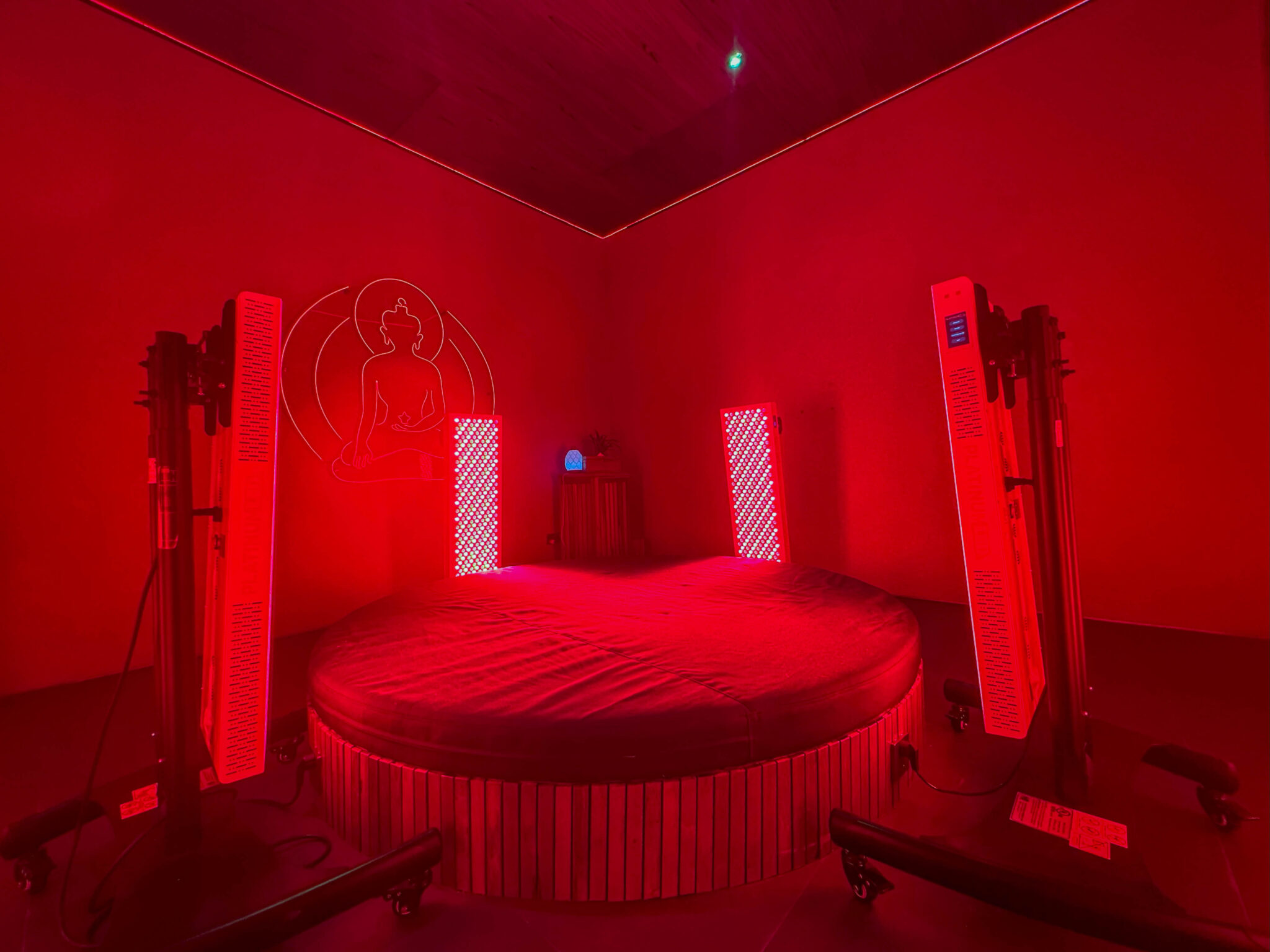
Our panels deliver both wavelengths simultaneously, combining the surface benefits of red light with the deep-tissue penetration of near-infrared.
Penetrates the skin to a depth of approximately 1–2cm, acting primarily on surface tissues, the epidermis, and dermis. Particularly effective for skin health and surface-level healing.
Penetrates significantly deeper — up to 5–10cm — reaching muscle tissue, tendons, joints, and even bone. The most therapeutically powerful wavelength range for systemic health benefits.
With over 5,000 peer-reviewed studies and a 40-year research history, photobiomodulation is one of the most evidence-backed therapeutic modalities in modern medicine.
Near-infrared light is absorbed by cytochrome c oxidase in the mitochondria, directly increasing ATP synthesis. More cellular energy means faster repair, better performance, and improved resilience across every organ system.
Red light activates fibroblasts — the cells responsible for producing collagen and elastin. Visible improvements in skin firmness, fine lines, and overall complexion typically appear within 4–8 sessions.
PBM reduces pro-inflammatory cytokines and oxidative stress. Effective for chronic inflammation, arthritis, fibromyalgia, back pain, tendinitis, and sports injuries — with effects measurable in blood markers.
Athletes use red light therapy to reduce DOMS (delayed-onset muscle soreness), accelerate tissue repair after training, and improve recovery time between sessions — documented across dozens of RCTs.
Near-infrared light penetrates the skull and has documented neuroprotective effects. Research supports improvements in cognitive function, depression, PTSD, TBI recovery, and neurodegenerative conditions.
Red light applied to the thyroid and reproductive areas has shown benefits for thyroid hormone production, testosterone levels, and melatonin regulation — supporting hormonal health from the outside in.
Photobiomodulation has one of the largest evidence bases of any biohacking modality. The therapy has been studied in humans since the 1960s and has received FDA clearance for multiple indications.
More published research supports photobiomodulation than virtually any other light-based therapy. The evidence covers skin, brain, musculoskeletal, cardiovascular, and metabolic outcomes.
Photobiomodulation was first discovered in 1967. Decades of refinement have pinpointed the exact wavelengths (630–660nm and 810–850nm) that produce the most significant biological effects.
When used correctly, red light and near-infrared therapy has an outstanding safety profile with no documented negative side effects at therapeutic doses. It is non-thermal, non-invasive, and well-tolerated.
A 20-minute session with no downtime, no discomfort, and no recovery needed. Perfect as a standalone session or combined with cryotherapy and Live O2 for a complete biohacking protocol.